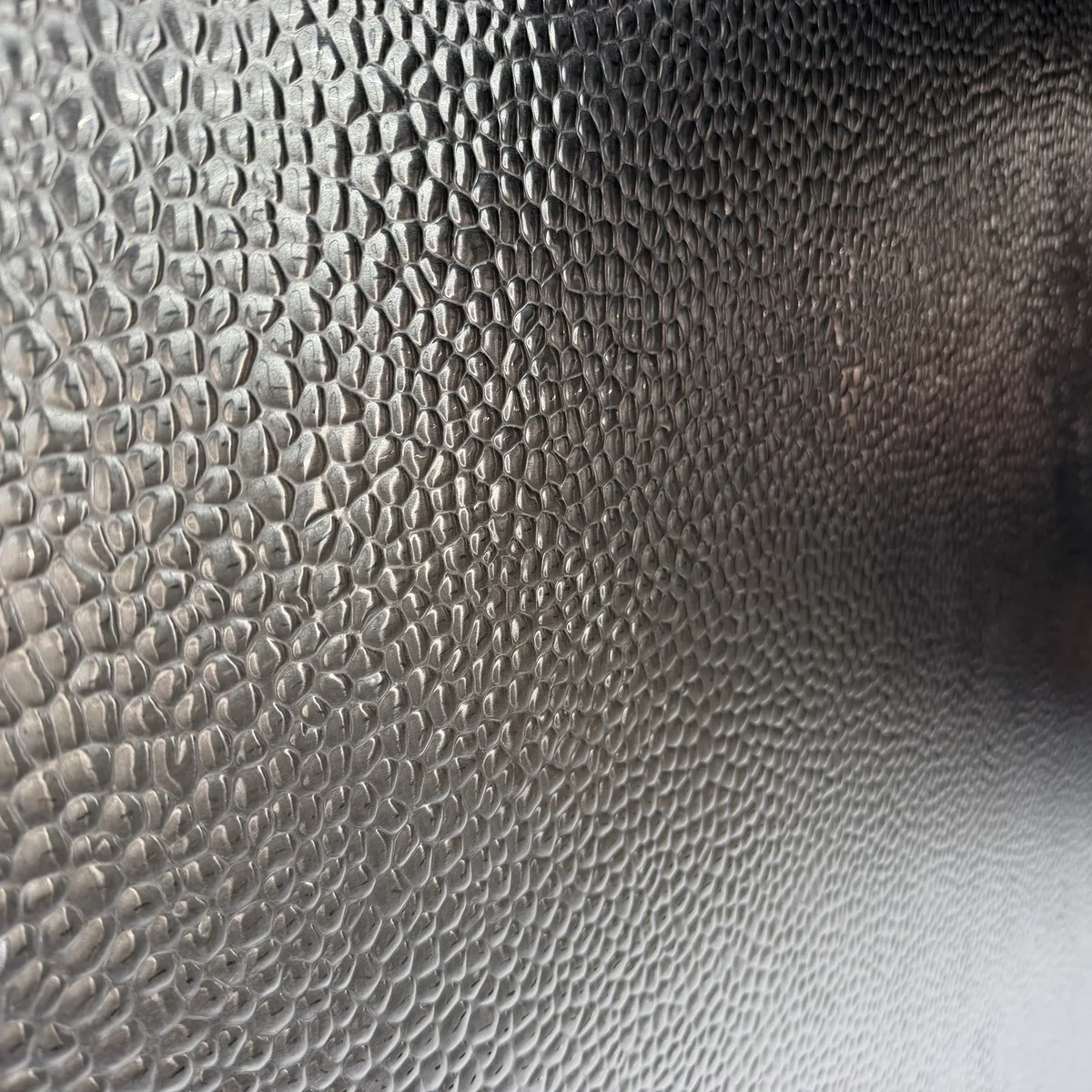
You recognise hammered sheet immediately: the surface looks as if it had been worked by hand with a hammer. Behind it is a simple principle and a very forgiving material. This article explains how the sheet is made, where it is used and how to cut and paint it.
Problem
The task: a surface that looks robust and stays robust
Smooth sheet shows every dent, every scratch and every fingerprint. On large surfaces that are touched, knocked or loaded in everyday use, this soon becomes noticeable.
What is needed is a surface that is light, does not rust and hides small signs of use well. This is exactly why hammered sheet used to be popular in caravan and camper construction, for example for outer skins and panelling.
Cause
How the texture is made: embossed pure aluminium
Hammered sheet is usually made from aluminium Al 99.5 (EN AW-1050A). The smooth sheet runs through an embossing process: many small hammers or press dies push the typical shape into the surface. This creates an even pattern.
Because the sheet is embossed right through, it has two different sides: the indented side with the hollows, and the top side, on which the texture bulges outwards. The two sides look different and appear different depending on the light. Our photos show both sides.
Pure aluminium is soft and easy to form. That is why it takes the embossing cleanly. The texture breaks up the light and makes small pressure marks disappear in the pattern. We stock hammered sheet in temper H14/24 in 1.0 mm.
| Feature | Hammered sheet |
|---|---|
| Material | Aluminium Al 99.5 (EN AW-1050A) |
| Condition | H14/24 |
| Thickness at MVG | 1.0 mm |
| Surface finish | embossed through: indented side and top side |
| Processing | Cut-to-size and bent part |
Material data from our range; the certificate of the respective delivery is binding.
Solution
Cutting: guillotine shear with an eye on the visible side
Hammered sheet cuts well on the guillotine shear. During the cut, the hold-down and the blade press on the sheet. This can leave slight marks on the embossed surface, especially near the cut edge. This is normal for this material and usually hardly visible in the pattern.
So plan the visible side deliberately: should the indented side or the top side face outwards? In the configurator you choose which side is visible. For parts where the edge is in view, a short note in the order is worthwhile.
- Define the visible side: indented side or top side
- Expect slight marks near the cut edge
- Note visible edges in the order
Remember: Choose the visible side first (indented side or top side), then cut and bend.
In practice
In practice: painting and use
Hammered sheet can usually be painted over well. Preparation is what counts: always degrease the surface beforehand, for example with cellulose thinner or an aluminium cleaner. Only on a clean, grease-free surface does the paint adhere reliably.
Typical uses are panelling in caravan and camper construction, back panels, covers, furniture and shopfitting parts, and model-making and workshop projects. The low weight of aluminium helps wherever every kilo counts.
At a glance
- Define thickness and size (1.0 mm from stock)
- Choose the visible side: indented side or top side
- Allow for slight marks at the cut edge
- Degrease thoroughly before painting
Matching products
Frequently asked questions
What is hammered sheet made of?
Usually pure aluminium Al 99.5 (EN AW-1050A). The texture is embossed into the smooth sheet with many small hammers or press dies.
Which side of hammered sheet is the visible side?
You decide. The sheet has an indented side with hollows and a top side with a raised texture. In the configurator you specify which side faces outwards.
Can hammered sheet be cut with a guillotine shear?
Yes, it cuts well. Slight marks can appear on the embossed surface, especially near the cut edge.
Can hammered sheet be painted?
Yes, it can usually be painted over well. Degrease the surface thoroughly beforehand, for example with cellulose thinner or an aluminium cleaner.
What was hammered sheet used for in the past?
Often in caravan and camper construction, for example for outer skins and panelling. The texture is light, does not rust and hides small pressure marks.