Topic
Materials
Which alloy suits the application, the processing and the budget? Here we compare materials from our range with standard values and practical notes.
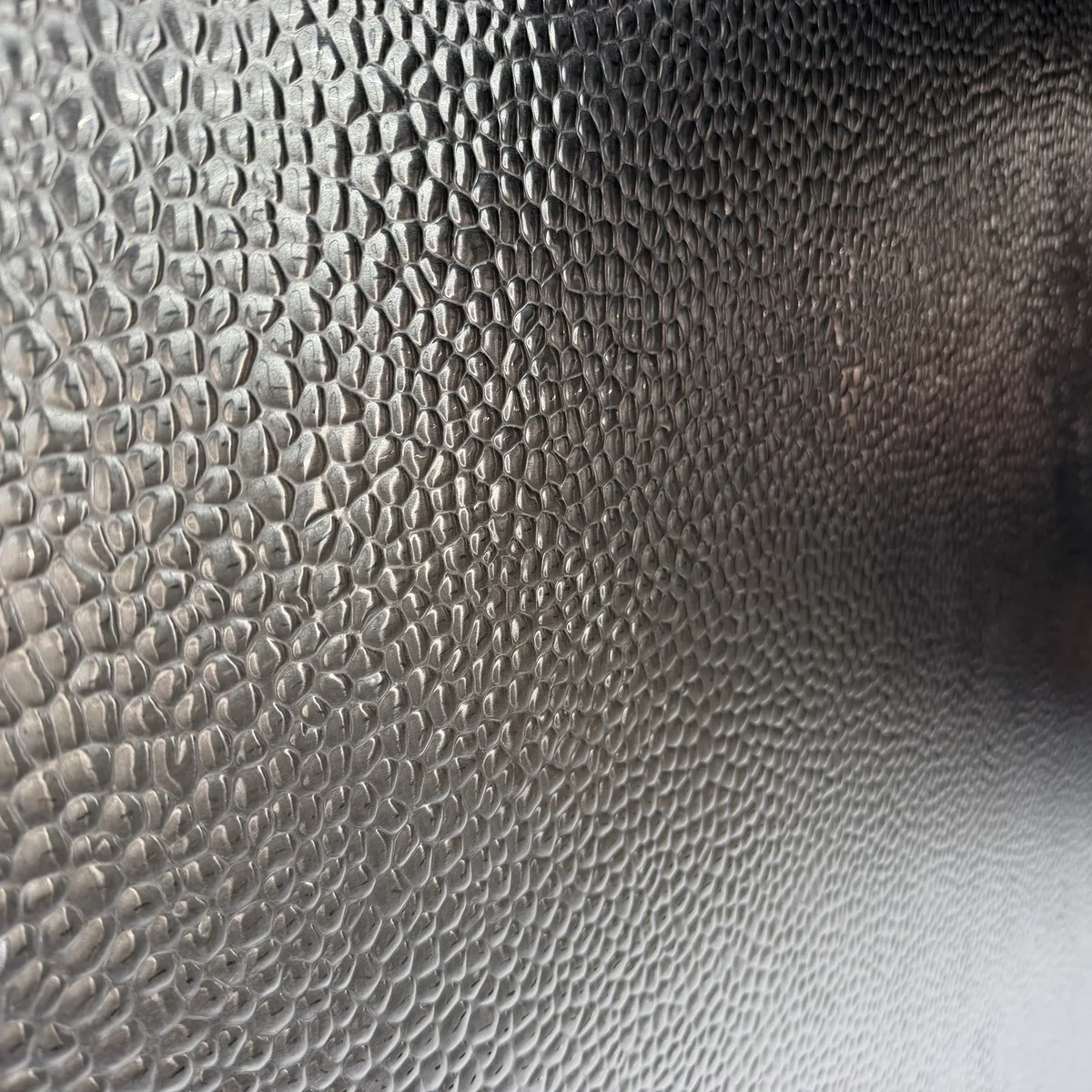
Hammered aluminium sheet: production, cutting and painting
Embossed pure aluminium with a lively surface: how hammered sheet is made, what it is suited to, and what to watch out for when cutting and painting.
Read the article →Brass or gunmetal? Three copper alloys compared
Ms58 for turned parts, Ms63 for bending, gunmetal Rg7 for bearings and bushes: how to recognise the right copper alloy.
Read the article →Copper in the control cabinet: E-Cu or SF-Cu?
For busbars, conductivity counts; for brazed joints, suitability for welding and brazing. Two copper grades, two tasks.
Read the article →Not all stainless steel is the same: 1.4301, 1.4305, 1.4307 and 1.4571
Four stainless steel grades, four strengths: welding, turning, chlorides. Which grade suits which semi-finished product.
Read the article →Aluminium: properties and alloys
What makes aluminium special, how the alloy groups 1000 to 7000 differ, and which grade suits sheet, profile or turned part.
Read the article →Material certificates: 2.1, 2.2, 3.1 and 3.2 explained
Which document do you need for your delivery? Clarify this before you order, so that the material and the certificate match.
Read the article →Choosing chequer plate: pattern, base thickness and visible side
Two thickness values, one textured surface: what matters when cutting and bending chequer plate.
Read the article →V2A or V4A: choosing stainless steel by application
The generic names alone are not enough for an order. The material number and the operating conditions make your enquiry unambiguous.
Read the article →